
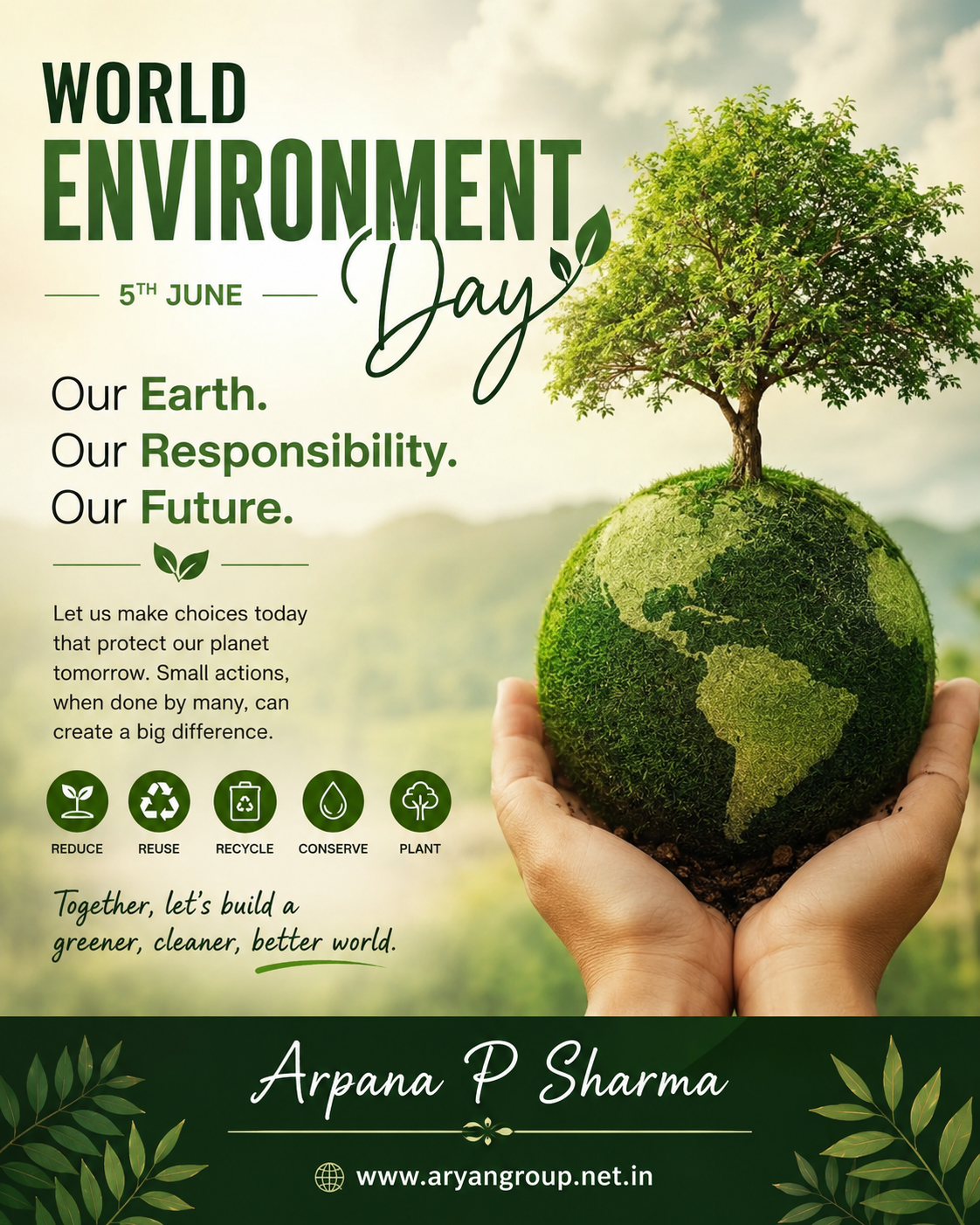
Every year, on World Environment Day, we see messages about planting trees, reducing plastic, and saving water. While these are important actions, perhaps the deeper message of this day is something much bigger: it is an opportunity to reflect on the relationship between human progress and the planet that makes that progress possible.
Modern society has achieved extraordinary things. We have built cities, connected the world through technology, advanced medicine, explored space, and created opportunities that previous generations could only dream about. Yet, in the pursuit of growth, we have often forgotten a simple truth—we are not separate from nature; we are a part of it.
The air we breathe, the water we drink, the food we eat, and the resources that fuel our industries all come from the environment. When nature thrives, humanity thrives. When nature suffers, eventually society does too.
World Environment Day is therefore not about choosing between development and conservation. It is about finding a way to move forward without leaving destruction behind us.
The concept of sustainable development is often discussed in conferences, policies, and business meetings. However, sustainability is not merely a government agenda or a corporate responsibility. It is a way of thinking. It asks us a simple question:
“Can we meet our needs today without compromising the opportunities of tomorrow?”
The answer lies not only in major policies but also in millions of everyday decisions made by ordinary people.
A teacher influences sustainability by shaping environmentally conscious students. A doctor contributes by promoting healthier communities. An engineer designs systems that use resources efficiently. A business leader can create environmentally responsible workplaces. A farmer protects the land through sustainable practices. A homemaker reduces waste and teaches responsible consumption. Even a student who chooses not to litter is participating in environmental protection.
No role is too small. No profession is disconnected from sustainability.
Perhaps the most important lessons begin at home. Parents have a unique opportunity to teach children values that no textbook can fully convey. A child who learns not to waste food understands gratitude. A child who learns to care for plants develops respect for life. A child who sees parents conserving water and electricity learns responsibility. Environmental awareness is not just taught—it is demonstrated.
For young people, this generation presents both a challenge and an opportunity. Today’s youth will inherit a world shaped by the decisions being made now. Yet they are also the most powerful force for change. Through innovation, technology, entrepreneurship, research, and community action, young minds are already leading conversations about climate, conservation, and sustainable living.
The future does not need young people who simply understand environmental issues; it needs young people who are willing to act.
Those interested in contributing more meaningfully can also develop expertise through learning. Environmental science, sustainability management, renewable energy, climate studies, waste management, sustainable agriculture, green building practices, and corporate social responsibility are no longer niche subjects. They are becoming essential skills for the future workforce. As industries evolve, environmental awareness will increasingly become a professional advantage as well as a social responsibility.
But perhaps the most valuable lesson of World Environment Day is this: sustainability is not about perfection.
Many people feel overwhelmed by global environmental challenges. They wonder whether one person can truly make a difference. The reality is that no single individual can solve every problem, but every individual can contribute to a solution.
A reusable bag may seem insignificant. Planting a single tree may appear small. Conserving water for one day may not seem revolutionary. Yet every meaningful movement in history has begun with countless small actions repeated consistently by ordinary people.
The environment does not need a few people doing sustainability perfectly. It needs millions of people doing it consciously.
As we observe World Environment Day, let us move beyond treating it as a symbolic occasion. Let it become a reminder that progress and responsibility must travel together. Let it encourage us to think not only about the world we inherited but also about the world we will leave behind.
The Earth has given humanity everything needed to flourish. The question before us is whether we will use that gift wisely.
The future is not something we inherit. It is something we create—through our choices, our values, and our actions every single day.
Leave a Reply